What is PAT Testing? A Plain-English Guide
PAT testing — now officially called Electrical Equipment Testing — is the process of checking portable electrical appliances are safe to use. Here is everything you need to know.

If you have ever been handed a sticker-covered kettle or seen a label on a laptop charger saying "Tested for electrical safety", you have already encountered PAT testing. But what exactly is it, who needs it, and what does the law actually say?
What Does PAT Testing Mean?
PAT stands for Portable Appliance Testing. It is the process of inspecting and testing portable electrical equipment to check it is safe to use. The term covers both a visual inspection and a series of electrical tests carried out using specialist equipment.
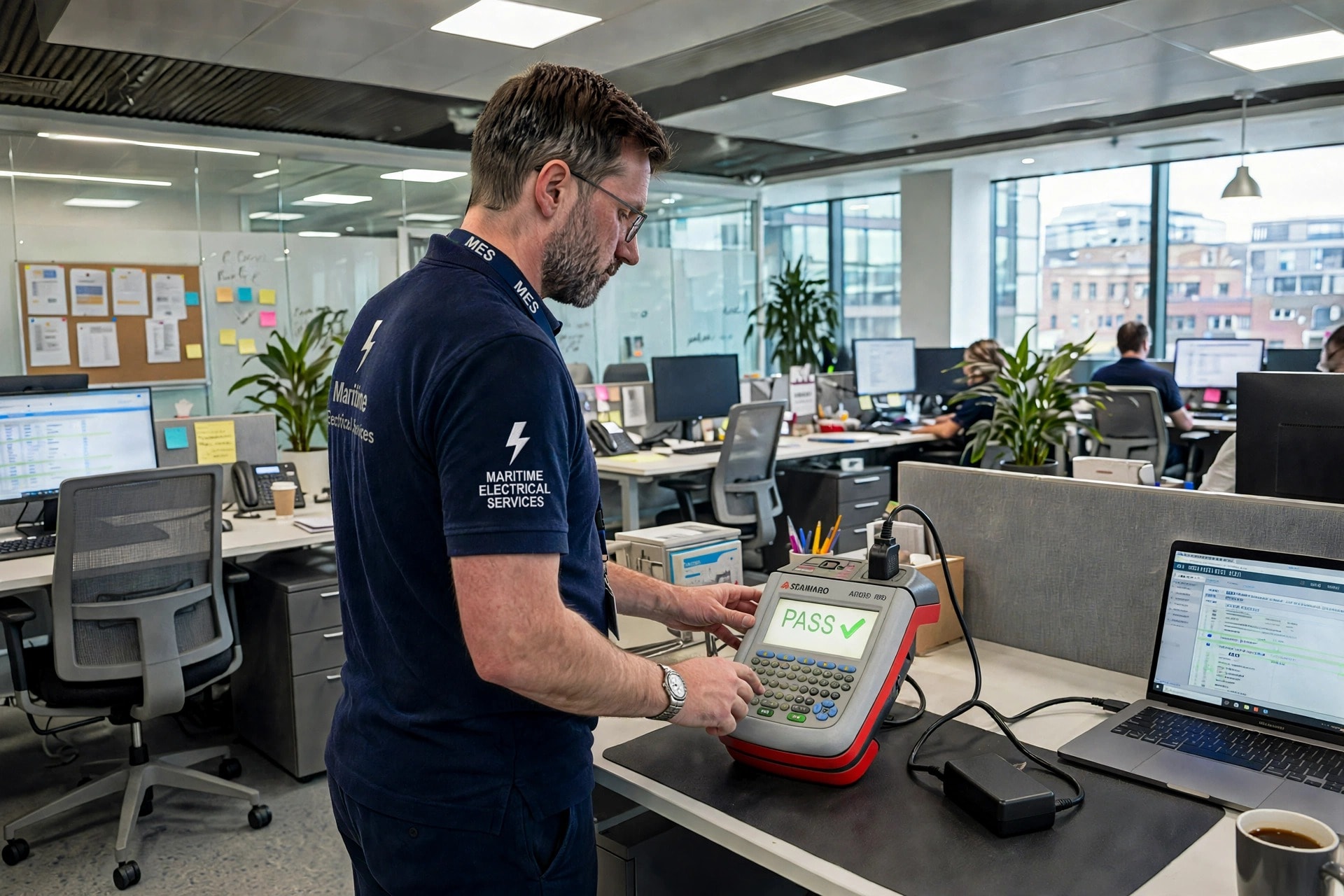
In practice, a qualified engineer visits your premises, checks every mains-powered item, and applies a pass or fail label to each one. You receive a full digital asset register and an insurance-approved certificate on completion.
PAT Testing Has Been Renamed
Since the publication of the IET Code of Practice 5th Edition, the official term is now Electrical Equipment Testing (EET). The name change reflects a broader scope — the process now covers a wider range of equipment and testing methods than the original PAT testing standard described.
The term "PAT testing" is still widely used and understood, but if your insurer, landlord, or facilities manager refers to EET, they mean the same thing. You can read more about the name change in our guide: PAT Testing Has Been Renamed to EET — What Changed?
What Equipment Gets Tested?
Any item that plugs into a mains socket can be tested. This includes:
- Computers, monitors, laptops and docking stations
- Printers, scanners and photocopiers
- Desk lamps and floor-standing lights
- Extension leads and multi-socket adaptors
- Kettles, microwaves and kitchen appliances
- Vacuum cleaners and cleaning equipment
- Projectors and AV equipment
- Phone chargers and power adaptors
Fixed equipment — such as wall-mounted displays or built-in appliances — can also be included in a testing programme. For a full breakdown of what we test, see our EET page.
What Does the Test Involve?
A full EET inspection has two parts:
1. Visual inspection The engineer checks the plug, cable, casing and any visible components for signs of damage, wear, or unsafe modification. Many faults are identified at this stage.
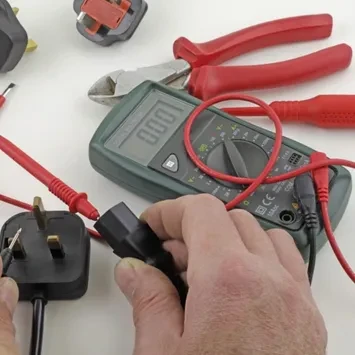
2. Electrical tests Using the latest calibrated testing equipment, the engineer carries out a series of electrical measurements including earth continuity, insulation resistance, and substitute leakage tests. The results are recorded against each item.
Items that pass receive a green label. Items that fail receive a red label and are removed from use. Minor faults — such as a damaged plug top or blown fuse — are repaired on the spot at no extra charge.
Is PAT Testing a Legal Requirement?
There is no law that specifically requires PAT testing by name. However, several pieces of legislation require employers and landlords to ensure electrical equipment is maintained in a safe condition:
- Electricity at Work Regulations 1989 — requires all electrical systems and equipment to be maintained to prevent danger
- Health and Safety at Work Act 1974 — places a general duty on employers to ensure the safety of employees and visitors
- Provision and Use of Work Equipment Regulations 1998 (PUWER) — requires work equipment to be maintained in an efficient state and good repair
The Health and Safety Executive (HSE) recognises regular inspection and testing as the accepted method of demonstrating compliance with these duties. Most business insurers also require evidence of regular testing as a condition of cover.
You can read the HSE's official guidance on maintaining portable electrical equipment at hse.gov.uk/electricity/faq-portable-appliance-testing.htm.
For more detail on the legal framework, see our Risk Assessment page.
How Often Should Equipment Be Tested?
There is no single fixed interval. The IET Code of Practice recommends testing frequencies based on the type of environment and the equipment's risk level:
| Environment | Suggested interval |
|---|---|
| Low-risk office | Every 2–4 years |
| School or college | Every 1–2 years |
| Construction site | Every 3 months |
| Hotel or care home | Every 1–2 years |
| NHS or healthcare | As directed by IET Code of Practice |
Your engineer will advise on the appropriate interval for your premises based on the equipment type and how it is used.
Who Carries Out PAT Testing?
Testing must be carried out by a competent person. In practice, this means someone with the right training, equipment, and knowledge to identify faults and interpret test results. At MES, all engineers hold City & Guilds 2377 qualifications and use the latest calibrated testing equipment.
What Do You Receive After Testing?
On completion of every visit, MES provides:
- Individual pass or fail label on every appliance
- Full digital asset register listing every item tested
- Insurance-approved EET certificate
- Free minor repairs (plug tops, fuses, cable terminations)
All documentation is delivered digitally and is suitable for insurance, audit, and health and safety purposes.
Getting a Quote
MES PAT Testing covers Kent, London, Essex, Sussex, Surrey, Hertfordshire, and Cambridgeshire. See our pricing page for full details — testing starts from 89p per item with no site charge for premises with 151 or more appliances.
Contact us on 01622 962306 or email info@mespattesting.com to arrange a visit. You can also check whether we cover your area on our location coverage page.
Further Reading
- NHS PAT Testing — specialist EET for NHS trusts and care homes
- Office PAT Testing — legal obligations for offices under the Electricity at Work Regulations
- School PAT Testing — Ofsted compliance and duty of care for educational settings
- Airport PAT Testing — DBS-checked engineers for live aviation environments
- Electrical Safety Recalls: What UK Businesses Need to Know — why a recall supersedes a test certificate
Explore Topics
Written by
MES PAT Testing
Content creator and writer sharing insights and stories.