PAT Testing for Landlords: What Are Your Obligations?
Landlords have a legal duty to ensure electrical equipment in their properties is safe. This guide explains what the law requires, what needs testing, and how to stay compliant.
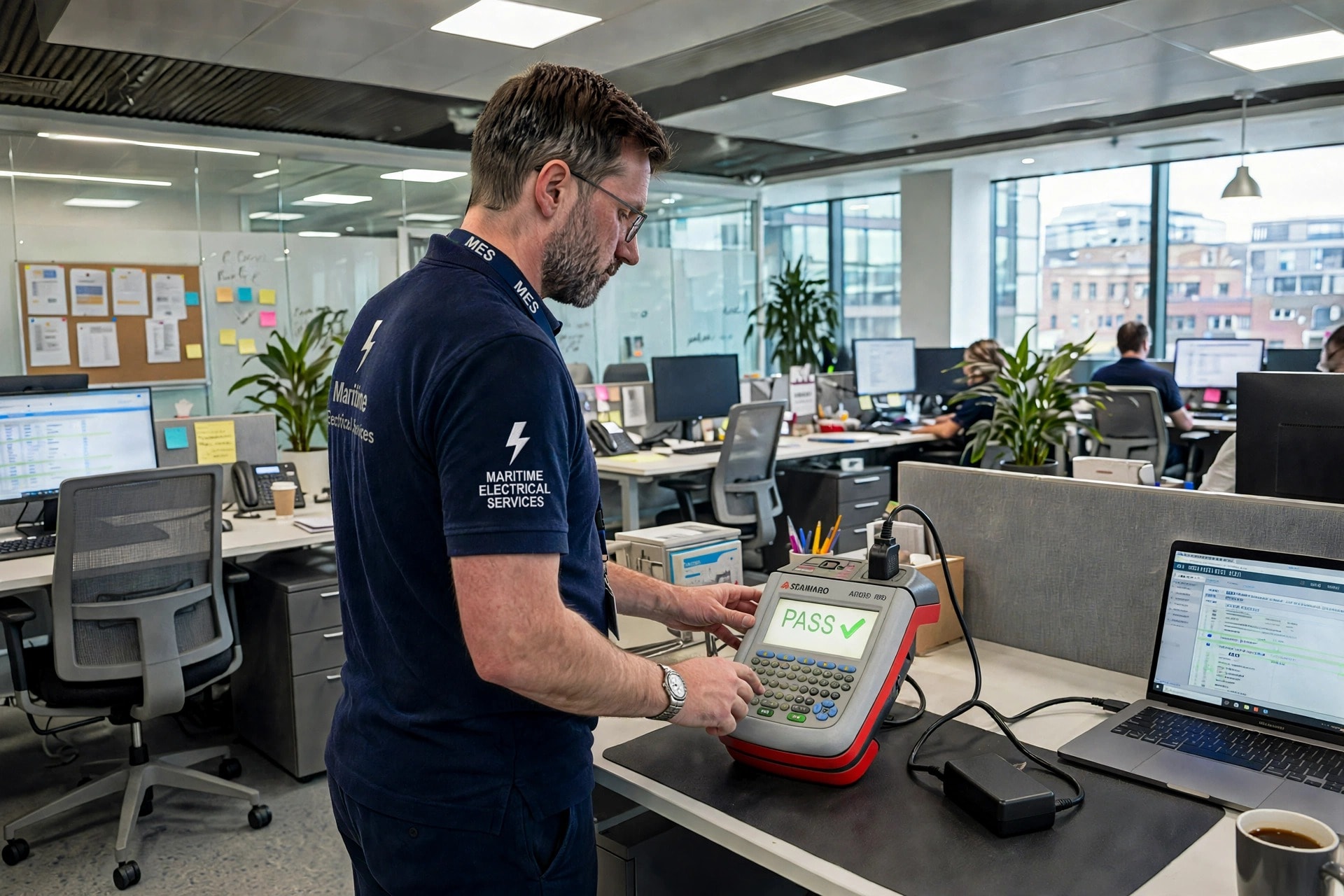
If you let a property — whether residential or commercial — you have a legal duty to ensure the electrical equipment you provide is safe. Failing to do so can invalidate your insurance, expose you to prosecution, and put your tenants at risk.
The Legal Duty
Several pieces of legislation apply to landlords and electrical safety:
Electricity at Work Regulations 1989 These regulations apply to all workplaces, including commercial properties let to businesses. They require all electrical equipment to be maintained in a safe condition to prevent danger.
Health and Safety at Work Act 1974 Landlords of commercial properties have a duty to ensure the premises and any equipment provided are safe for tenants and their employees.
Landlord and Tenant Act 1985 For residential landlords, this Act requires properties to be fit for human habitation, which includes safe electrical installations and equipment.
The Electrical Safety Standards in the Private Rented Sector (England) Regulations 2020 These regulations require landlords of privately rented residential properties in England to have the fixed electrical installation inspected and tested at least every five years by a qualified electrician. While these regulations specifically cover the fixed installation (wiring, sockets, consumer unit), they reflect the broader expectation that landlords maintain electrical safety throughout their properties.
The HSE provides clear guidance on maintaining portable electrical equipment at hse.gov.uk/electricity/faq-portable-appliance-testing.htm. For a broader overview of the legal framework, see our Risk Assessment page.
What Equipment Do Landlords Need to Test?
The equipment that requires testing depends on whether you are letting a residential or commercial property.
Residential properties If you provide electrical appliances as part of the tenancy — such as a washing machine, fridge, cooker, or electric shower — these should be inspected and tested regularly. White goods in particular are a common source of electrical faults.
Commercial properties (HMOs, offices, retail units) Any electrical equipment you provide as part of the lease should be included in a regular EET programme. This includes kitchen appliances in communal areas, lighting, extension leads, and any other mains-powered items.
Houses in Multiple Occupation (HMOs) HMO landlords face additional scrutiny from local authorities. Regular EET of all provided appliances is strongly recommended and may be required as a condition of your HMO licence.
For a full list of equipment types we test, see our EET page.
What Happens If You Don't Test?
The consequences of failing to maintain electrical equipment can be serious:
- Insurance invalidation — most landlord insurance policies require evidence of regular electrical safety testing. A claim arising from an untested appliance may be refused.
- Prosecution — under the Electricity at Work Regulations 1989, failure to maintain electrical equipment can result in prosecution and an unlimited fine.
- Civil liability — if a tenant or visitor is injured as a result of a faulty appliance, you may face a civil claim for damages.
How Often Should Landlords Test?
There is no single fixed interval, but the following is a reasonable guide:
| Property type | Suggested interval |
|---|---|
| Residential (low turnover) | Every 2–4 years |
| Residential (high turnover / HMO) | Annually or at each change of tenancy |
| Commercial office | Every 2–4 years |
| Commercial kitchen or retail | Annually |
Testing at each change of tenancy is good practice for residential landlords, as it provides a clear record of the condition of appliances at the start of each tenancy.
What Do You Receive After Testing?
On completion of every MES visit, you receive:
- Individual pass or fail label on every appliance
- Full digital asset register listing every item tested
- Insurance-approved EET certificate
- Free minor repairs (plug tops, fuses, cable terminations)
All documentation is delivered digitally and is suitable for insurance, local authority, and legal purposes.
Getting a Quote
MES PAT Testing covers Kent, London, Essex, Sussex, Surrey, Hertfordshire, and Cambridgeshire. See our pricing page for full details — testing starts from 89p per item with no site charge for premises with 151 or more appliances.
Check our location coverage page to confirm we cover your area, or contact us on 01622 962306 or email info@mespattesting.com to arrange a visit.
Further Reading
- What is EET (PAT Testing)? — a plain-English guide to the testing process
- Risk Assessment — the full legal framework for electrical safety obligations
- Office PAT Testing — EET for commercial landlords and business premises
- Electrical Safety Recalls: What UK Businesses Need to Know — a recalled appliance in a rental property must be removed immediately; a valid test certificate does not override a recall notice
Explore Topics
Written by
MES PAT Testing
Content creator and writer sharing insights and stories.