Electrical Safety Recalls: What UK Businesses and Landlords Need to Know
Thousands of electrical appliances are recalled in the UK every year due to fire and electrocution risks. Here is how to check whether equipment in your premises is affected — and what to do if it is.

Every year, thousands of electrical appliances are recalled in the UK because they pose a risk of fire, electric shock, or other serious harm. Washing machines, tumble dryers, dishwashers, microwaves, and even phone chargers have all been subject to major recalls in recent years.
For businesses, landlords, and facilities managers, a product recall is not just a consumer issue — it is a legal and safety obligation.
What Is a Product Recall?
A product recall is issued when a manufacturer or retailer identifies a safety defect in a product that has already been sold. In the UK, recalls are coordinated by the Office for Product Safety and Standards (OPSS), which is part of the Department for Business and Trade.
When a recall is issued, the manufacturer is required to notify customers and arrange for the product to be repaired, replaced, or refunded. However, the system relies heavily on consumers and businesses registering their appliances and responding to recall notices — which many do not.
The OPSS maintains a public database of all current product recalls and safety alerts at gov.uk/product-safety-alerts-reports-recalls. This is the definitive source for checking whether any appliance in your premises is subject to a recall.
High-Profile UK Recalls
Several major recalls in recent years have highlighted the scale of the problem:
Whirlpool tumble dryers (2015–2020) One of the largest recalls in UK history, affecting around 800,000 Hotpoint, Indesit, and Creda tumble dryers. The fault caused a number of house fires. Whirlpool initially offered a modification rather than a replacement, which was widely criticised. The recall was eventually extended and the OPSS took enforcement action.
Beko fridge-freezers (2019) Beko recalled a number of fridge-freezer models following reports of fires caused by a defective drain heater component. The recall affected models sold between 2010 and 2015.
Samsung washing machines (2013–2016) Samsung recalled a range of washing machines in the UK and US following reports of fires caused by electrical faults in the motor.
These cases illustrate that recalls can affect appliances that have been in use for years without any apparent problem — and that the risk can be significant.
Why This Matters for Businesses and Landlords
If you are an employer, landlord, or facilities manager, you have a legal duty to ensure that electrical equipment on your premises is safe. This duty is not discharged simply because the appliance passed its last EET inspection.
A product recall supersedes a test certificate. If an appliance has been recalled, it should be taken out of use immediately — regardless of when it was last tested.
The relevant legislation includes:
- Electricity at Work Regulations 1989 — requires all electrical equipment to be maintained in a safe condition
- Health and Safety at Work Act 1974 — places a duty on employers to ensure the safety of employees and visitors
- Consumer Protection Act 1987 — makes it an offence to supply unsafe goods, including recalled products
For landlords, continuing to provide a recalled appliance to a tenant could constitute a breach of the implied duty of care and expose you to civil liability if the appliance causes harm. See our Risk Assessment page for more on the legal framework.
How to Check for Recalls
1. Check the OPSS database Visit gov.uk/product-safety-alerts-reports-recalls and search by brand, product type, or model number.
2. Register your appliances Many manufacturers offer appliance registration, which means you will be notified directly if a recall affects your product. The Register My Appliance service, run by the Association of Manufacturers of Domestic Appliances (AMDEA), allows you to register multiple appliances in one place.
3. Check the serial number Recalls are usually model and serial number specific. The serial number is typically found on a label inside the door or on the back of the appliance. Cross-reference it against the recall notice on the manufacturer's website or the OPSS database.
4. Sign up for OPSS alerts The OPSS publishes new safety alerts and recalls regularly. You can monitor their updates at gov.uk/government/organisations/office-for-product-safety-and-standards.
What to Do If an Appliance Is Recalled
If you identify a recalled appliance on your premises:
- Take it out of use immediately — unplug it and label it clearly so it is not used again
- Contact the manufacturer — follow the recall instructions to arrange repair, replacement, or refund
- Update your asset register — note the recall in your EET records
- Notify relevant parties — if you are a landlord, inform your tenant; if you are an employer, inform your health and safety lead
Do not wait for your next scheduled EET visit to act. A recalled appliance should be removed from use as soon as the recall is identified.
How EET Fits In
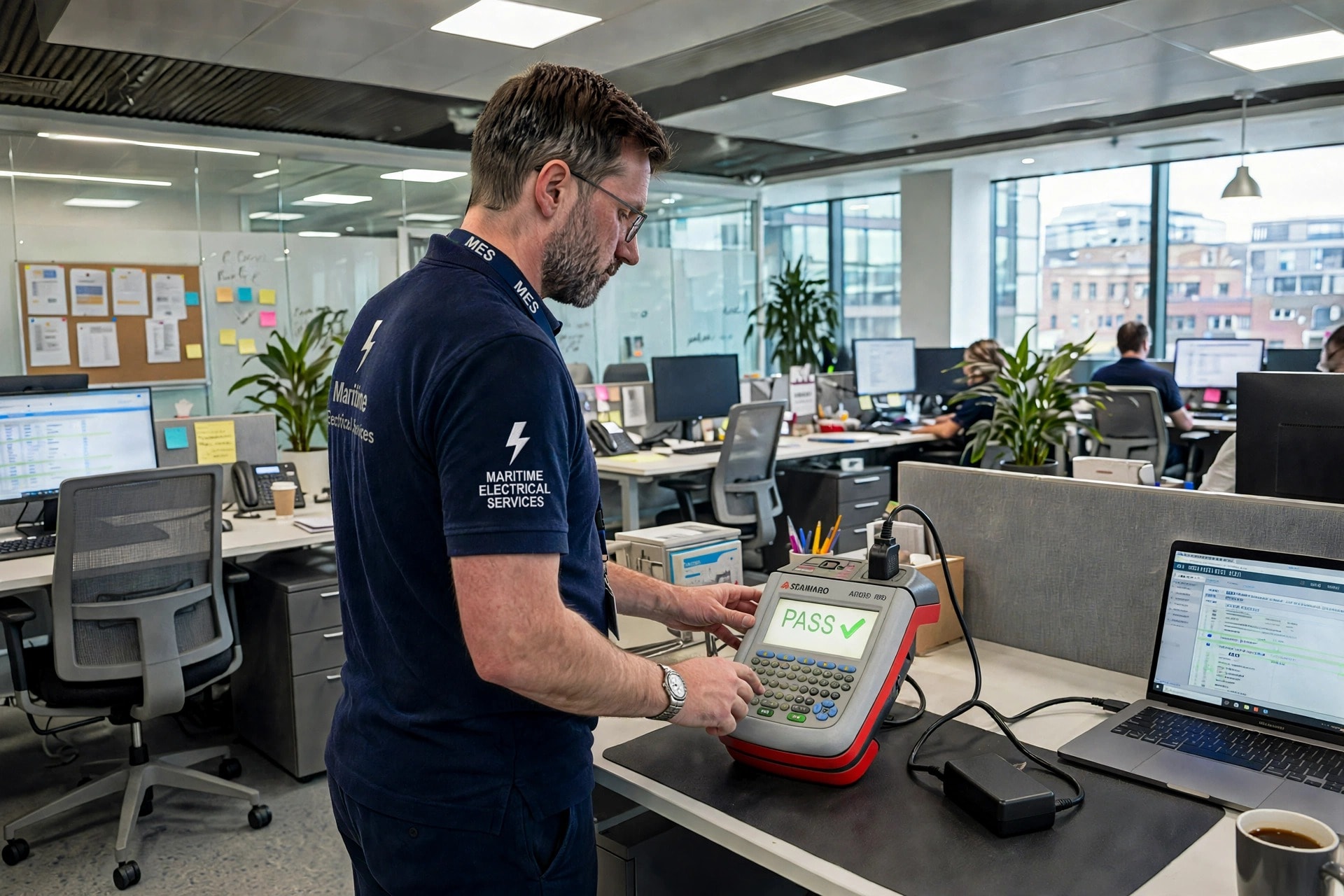
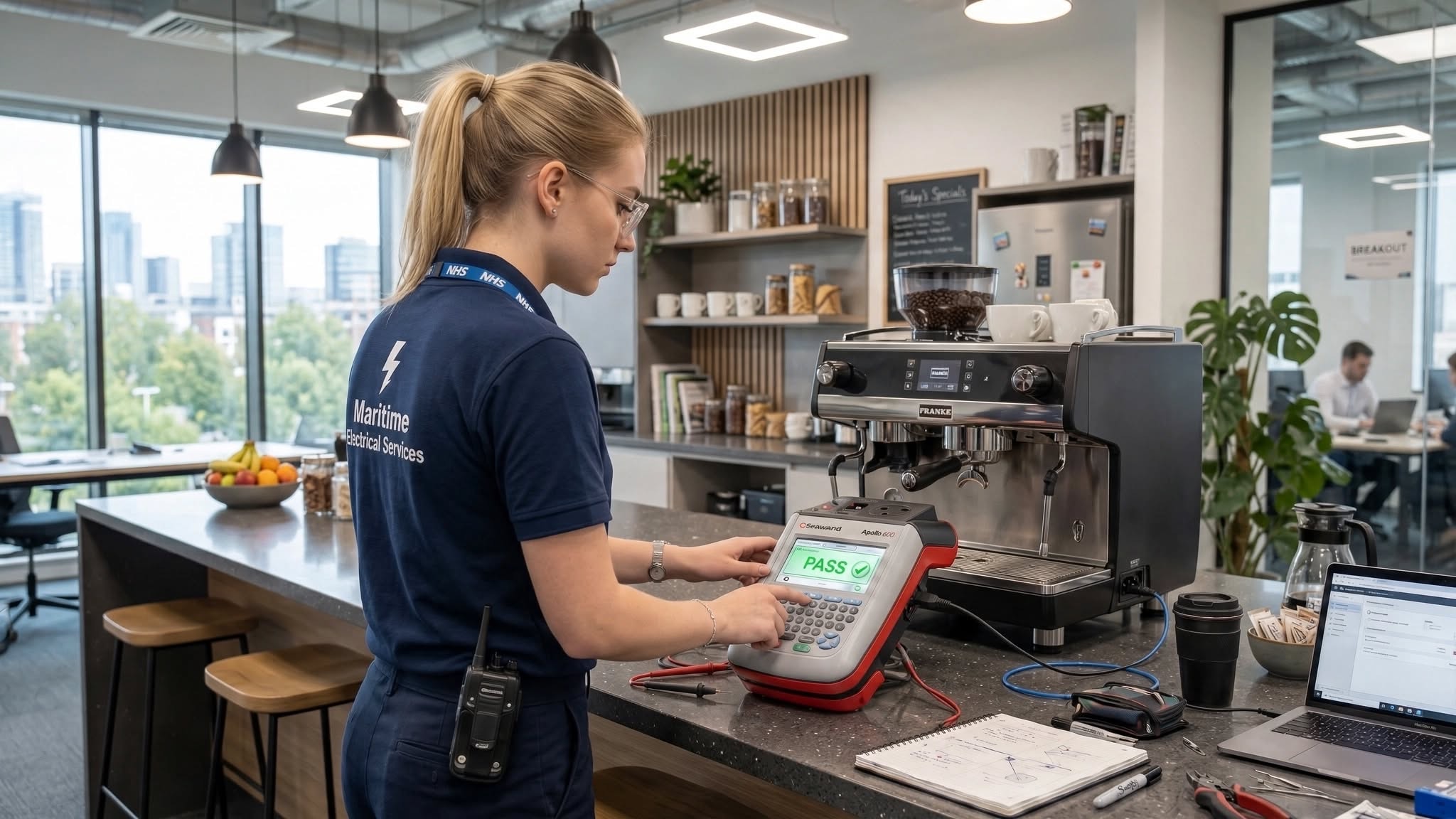
Regular Electrical Equipment Testing is an important part of electrical safety management, but it is not a substitute for monitoring product recalls. EET identifies faults that develop over time — worn cables, damaged plugs, insulation breakdown — but it cannot detect a manufacturing defect that has not yet manifested as a measurable electrical fault.
The two processes are complementary:
- EET identifies equipment that has deteriorated or been damaged in use
- Recall monitoring identifies equipment with inherent manufacturing defects
A robust electrical safety programme includes both. See our EET page for more on what a testing visit involves, or our pricing page for a quote.
Staying Compliant
The simplest way to stay on top of electrical safety obligations is to:
- Maintain a full asset register of all electrical equipment on your premises
- Have equipment tested at appropriate intervals by a qualified engineer
- Check the OPSS recall database regularly — at least quarterly
- Register appliances with manufacturers where possible
- Act immediately on any recall notice
MES PAT Testing covers Kent, London, Essex, Sussex, Surrey, Hertfordshire, and Cambridgeshire. Contact us on 01622 962306 or email info@mespattesting.com to arrange a visit, or check our location coverage page to confirm we serve your area.
Further Reading
- PAT Testing for Landlords: What Are Your Obligations? — how recall obligations sit alongside your broader landlord duties
- EET Requirements for NHS and Care Homes — recalled appliances in clinical and care settings carry heightened risk
- Office PAT Testing — EET for commercial premises and employer obligations
- Risk Assessment — the full legal framework for electrical safety compliance
Explore Topics
Written by
MES PAT Testing
Content creator and writer sharing insights and stories.